METHODS · 2026-08-12
Tteok Tools: Siru, Steamers, and Molds
By Tteok Curator
Cheesecloth, metal siru, bamboo steamer, or instant pot — what each tool does to your tteok's texture.
TL;DR
Cheesecloth, metal siru, bamboo steamer, or instant pot — what each tool does to your tteok's texture.
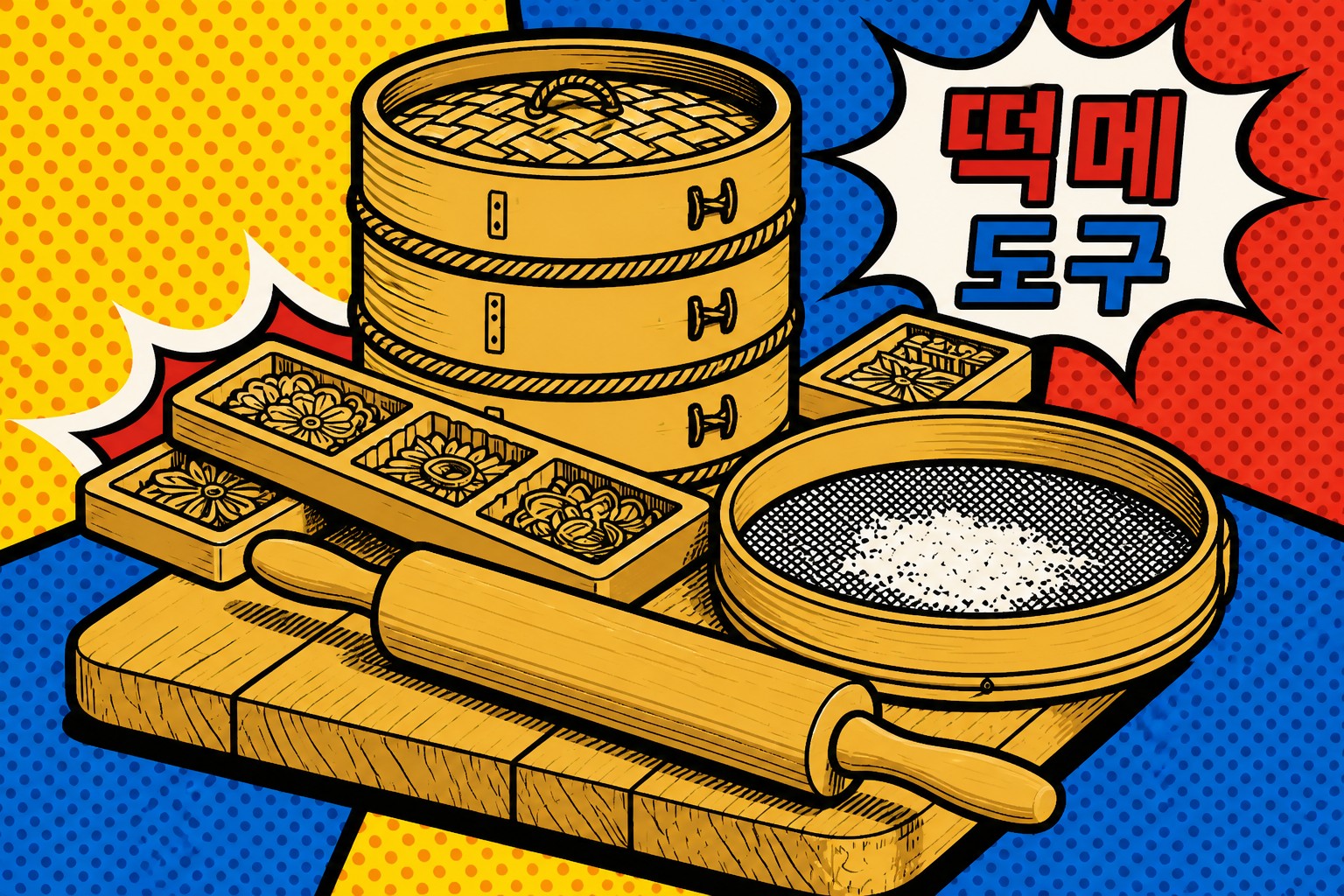
A siru is an earthenware steamer with a perforated base; its thickness retains heat and moisture, producing a more evenly risen baekseolgi than a thin bamboo steamer that vents rapidly. Home cooks mimic it with a metal pot plus muslin liner and a tight lid wrapped in cloth.
Bamboo steamers shine for garae and songpyeon where you want quick, hot steam and pine aroma; metal pots hold steady, longer heat for layered mujigae. Match tool to cake type rather than buying every form.
Molds press jeolpyeon and hwajeon into shapes. Lightly oil the mold, dust with roasted soybean powder as release, and press chilled dough for a sharp imprint; pounded chigi-tteok resists molding — steam-then-press, not pound-then-press.
Instant pots and steam ovens can work if you manage drip. Use pot-in-pot with a trivet, cover tteok with a dry towel under the lid, and steam 5 minutes longer than stovetop because pressure cycles vent differently. Expect a slightly denser crumb.
Cleanup tip: soak siru cloth and molds immediately; dried rice starch welds to surfaces and scours poorly. Soak 20 minutes in hot water, then wash with minimal soap so residues do not perfume your next batch.
Across the Kimchee Network
More from the Kimchee Network