GUIDE · 2026-08-13
Sweet vs. Savory: The Tteok Pairing Spectrum
By Tteok Curator
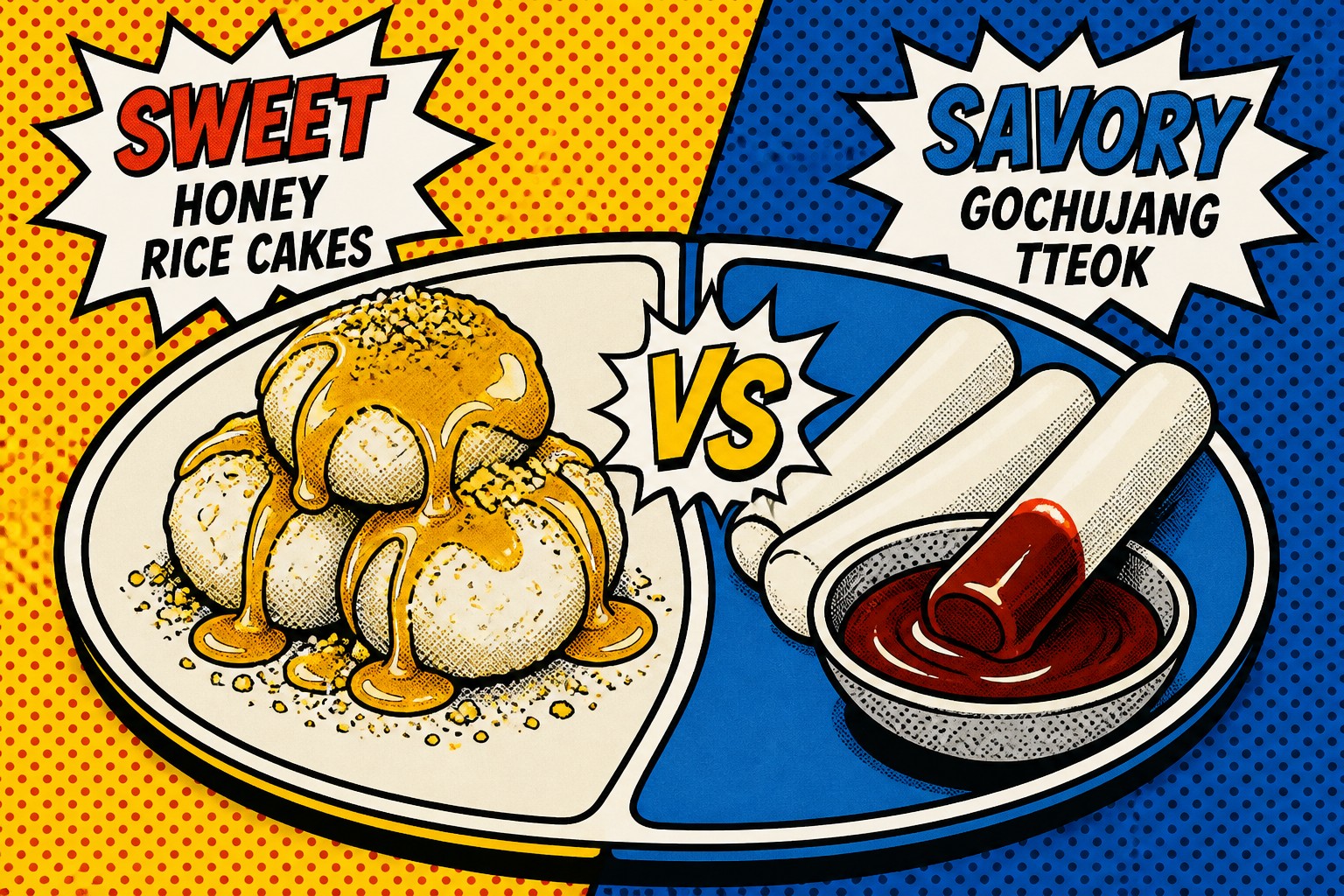
Map every tteok on a sweet-savory line and the table organizes itself — tea needs sweet, broth needs bland.
TL;DR
Map every tteok on a sweet-savory line and the table organizes itself — tea needs sweet, broth needs bland.
Sweet tteok cluster: injeolmi with honey, yaksik with brown sugar and chestnuts, gyeongdan rolled in sweet bean. They want unsweetened or bitter pairings — black sesame tea, omija, or roasted barely tea — so sweetness is framed, not doubled.
Bland tteok cluster: garae-tteok, tteokguk slices, bare baekseolgi without added sugar. They carry broth or sauce; pairing them with more sweet makes the table taste like dessert throughout. Anchor bland tteoks to savory sides like jorim or kimchi.
Mid-line tteoks like songpyeon and ssuk-tteok bridge. Their fillings are lightly sweet while dough leans savory-herbal; they sit comfortably between kimchi and tea without committing to either, which explains their holiday ubiquity.
Portion sequencing matters: start a tasting with bland garae-tteok and broth, move to ssuk and songpyeon, finish with yaksik and honey hwajeon — a tasting menu arc that respects palate fatigue without extra plating.
Fusion missteps happen when sweet tteok enters savory contexts; a yakbap with tteokbokki sauce is novelty, not harmony. If you fuse, bridge with a neutral tteok so the flavor jump is smaller.
Across the Kimchee Network
More from the Kimchee Network