GUIDE · 2026-08-08
Everyday Tteok: Garae, Tteokguk, and the Tteok Shop Staples
By Tteok Curator
Meet the daily tteoks — garae-tteok, tteokguk slices, and jeolpyeon — the ones you buy weekly, not just for holidays.
TL;DR
Meet the daily tteoks — garae-tteok, tteokguk slices, and jeolpyeon — the ones you buy weekly, not just for holidays.
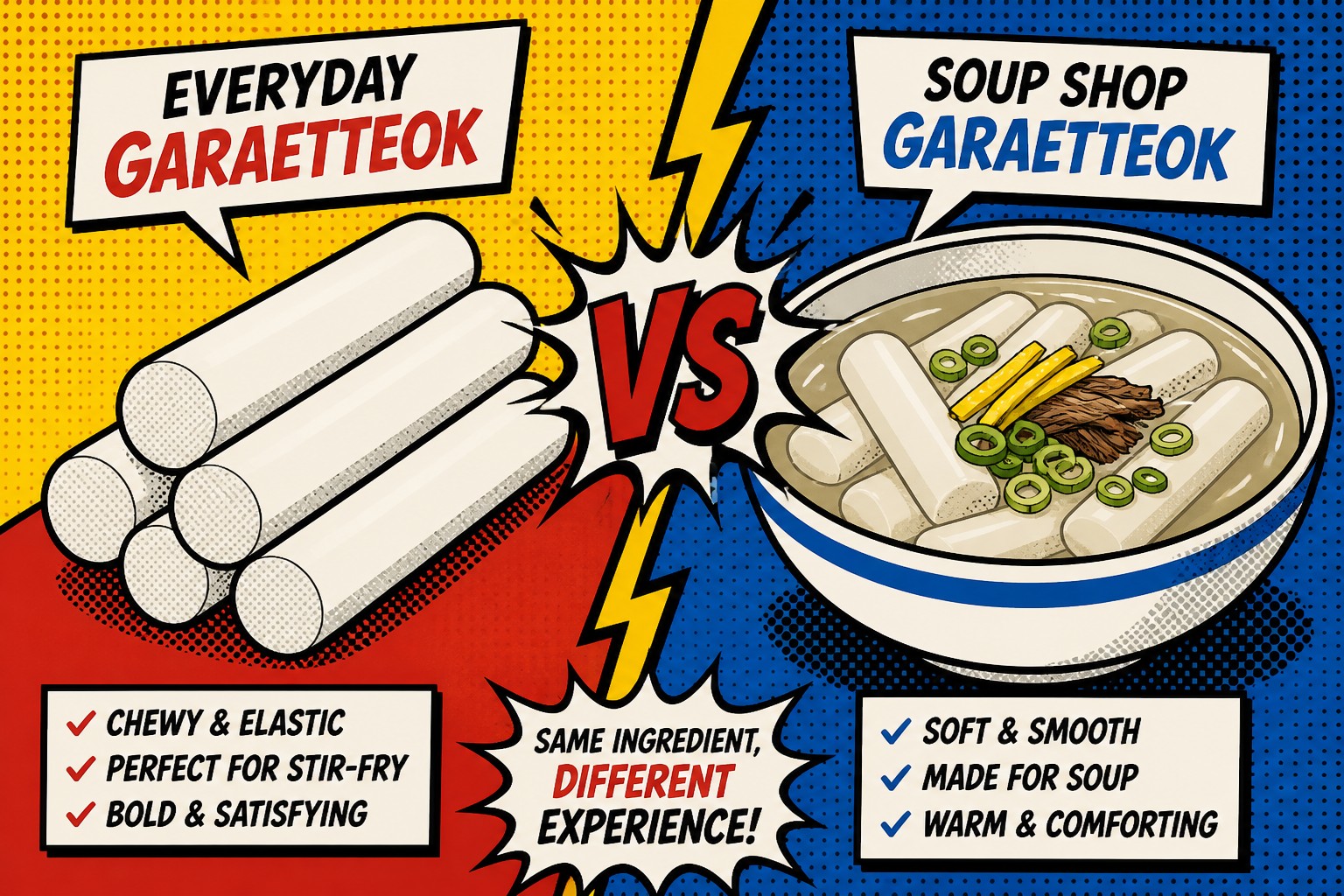
Daily tteok shops earn trust on texture, not showiness. Garae-tteok extruded hot, cut to length, remains mildly salty and springy; tteokguk-tteok bias-sliced ovals swell into soup without sloughing; jeolpyeon is the patterned press cake for everyday ancestral tables. Consistency is the craft.
Garae quality check at the market: press a warm piece — it should spring back within 2 seconds and leave a faint hand warmth without oozing oil. Sour or fermented smell means the batch sat too long at room temp; fresh tteok smells milky and barely sweet.
Home handling: keep garae refrigerated up to 4 days, frozen beyond that. Soak 15 minutes before soup or stir-fry; do not boil aggressively or edges shred. A gently simmered pot keeps ovals intact and broth clear, which is the point for a clean tteokguk.
Flavoring is minimal by design. These daily tteoks are blanks that carry broth, sauce, or honey-seed dips — sesame oil plus salt for kids, soy-sesame dip for adults, or honey for an afternoon bite. Think rice as bread, not dessert.
Where tteok.ai and dduk.ai diverge: tteok.ai treats these everyday staples as pantry staples akin to noodles or bread; dduk.ai treats heritage tteoks as ritual. Both are true, different shelves of the same store.
Across the Kimchee Network
More from the Kimchee Network